Tonometers Market to Hit US$ 0.8 Billion by 2034, Driven by Glaucoma Awareness
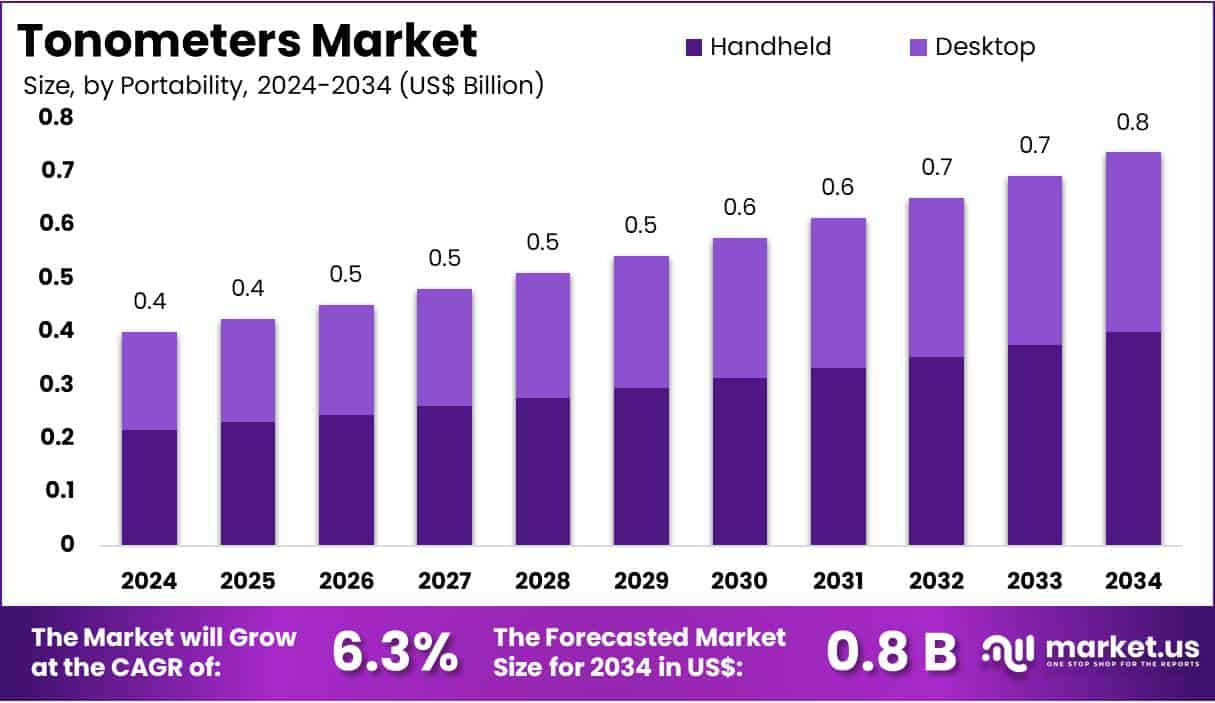
The Global Tonometers Market is expected to grow from US$ 0.4 billion in 2024 to US$ 0.8 billion by 2034, at a steady CAGR of 6.3%. This growth is mainly driven by increased awareness of eye health and the need for early detection of conditions like glaucoma and ocular hypertension. These issues are rising, especially among the elderly and people with chronic illnesses. As a result, health authorities now recommend regular eye pressure checks, increasing demand for tonometers across healthcare settings.
An aging population is one of the key factors fueling this market. Older adults are more likely to suffer from vision-related problems and require regular monitoring. In parallel, chronic illnesses such as diabetes are contributing to the rise in eye disorders, including diabetic retinopathy. Many diabetic care programs, especially those supported by governments, include routine tonometry. This trend is pushing the adoption of tonometers in clinics, hospitals, and even home based care.
Governments and public health bodies are taking active steps to improve eye care. Awareness campaigns, especially in rural and underserved regions, are promoting the importance of early eye disease detection. Increased funding for eye care clinics, mobile screening units, and vision testing programs is expanding access to diagnostic tools. Tonometers are becoming essential devices in these public initiatives aimed at preventing blindness and ensuring timely intervention.
Technological advancements are also driving market expansion. Modern tonometers are now more compact, user friendly, and often contact free, making the experience more comfortable for patients. This is especially beneficial for children and older adults. Additionally, the rise of telemedicine and remote patient monitoring supports the use of at-home tonometers. These innovations help patients monitor eye pressure over time, reducing the need for frequent in person visits, and extending care to remote areas.
Key Takeaways
- In 2024, the global tonometers market generated US$ 0.4 billion in revenue and is forecasted to double, reaching US$ 0.8 billion by 2034.
- The market is growing steadily at a compound annual growth rate (CAGR) of 6.3% between the years 2024 and 2034.
- Among product types, applanation tonometers led the market in 2024, capturing a significant 40.6% share due to their wide clinical usage.
- Based on portability, handheld tonometers were more popular, holding a dominant 54.3% share, favored for their convenience and ease of use.
- In the end-use category, ophthalmic centers led with 48.9% revenue share, driven by high patient flow and specialized eye care services.
- Regionally, North America emerged as the market leader in 2024, accounting for a robust 40.2% share of the global tonometers market.
Challenges
- Eye Shape and Corneal Thickness Affect Accuracy: Tonometer readings can vary depending on a person’s eye shape or how thick or soft their cornea is. Since everyone’s eyes are different, this can lead to pressure readings that are not always accurate. As a result, it becomes harder for doctors to assess a patient’s true eye health.
- Single Readings May Miss Pressure Fluctuations: Eye pressure naturally changes throughout the day due to factors like breathing, heartbeats, or body movements. Traditional tonometers usually provide a one-time measurement, which can miss these important changes and lead to incomplete assessments.
- Not Easy to Use on Every Patient: Some types of tonometers require special training to operate and may need the use of numbing eye drops or dye. This process can be uncomfortable for patients and time consuming for healthcare providers, making routine testing more difficult.
- Limited Accuracy in Special Cases: Certain eye conditions, like abnormal cornea shapes or extremely high eye pressure, can make it harder for some tonometers to deliver accurate readings. This can lead to incorrect diagnoses or delayed treatment, especially in serious cases.
- Too Much Data from Home Monitoring Devices: Modern at-home tonometers can collect a large amount of data over time. While this helps track changes, it can also overwhelm doctors. Sorting through this data takes time and may delay clinical decisions if not handled efficiently.
Opportunities
- User-Friendly Handheld Devices: Modern handheld tonometers are compact and easy to use. Many of them no longer require eye drops or professional training, making them ideal for home use or small clinics. This increases accessibility and convenience for regular eye pressure checks.
- Wearable Technology for Continuous Monitoring: Innovative wearable tonometers, such as smart contact lenses, now allow 24/7 monitoring of eye pressure. These devices help track pressure changes throughout the day and night, giving doctors a more accurate understanding of the patient’s condition.
- Dual Function: Diagnosis and Treatment: Some advanced devices are being designed to both measure eye pressure and deliver treatment when necessary. This integrated approach improves disease management and reduces the number of clinic visits required.
- Enhanced Safety and Patient Comfort: Many new models use disposable tips or covers to prevent infections. They are also more comfortable for patients, especially children and older adults, making the process less stressful.
- Advanced Data and Decision Support: Smart software tools now help analyze large amounts of eye pressure data quickly and accurately. These tools support doctors in making faster, more informed decisions while reducing the risk of human error.
Conclusion
The Tonometers market is expanding due to rising awareness of eye health and the growing need for early detection of eye conditions like glaucoma. Aging populations and chronic diseases are increasing the demand for regular eye pressure checks. Government programs and public health campaigns are also boosting the use of these devices in clinics and rural areas. New technologies are making tonometers easier to use, more comfortable for patients, and suitable for home use. Despite challenges such as reading accuracy and data overload, ongoing innovation offers strong opportunities for growth. With improved access, better devices, and strong healthcare support, tonometers are becoming a key tool in global eye care management.
Contact us on
Market.us (Powered By Prudour Pvt. Ltd.)
Email: inquiry@market.us
Address: 420 Lexington Avenue, Suite 300,
New York City, NY 10170, United States
Tel: +1 718 618 4351


Comments
Post a Comment