Image-Guided And Robot-Assisted Surgical Procedures Market Set for 14.3% CAGR Surge
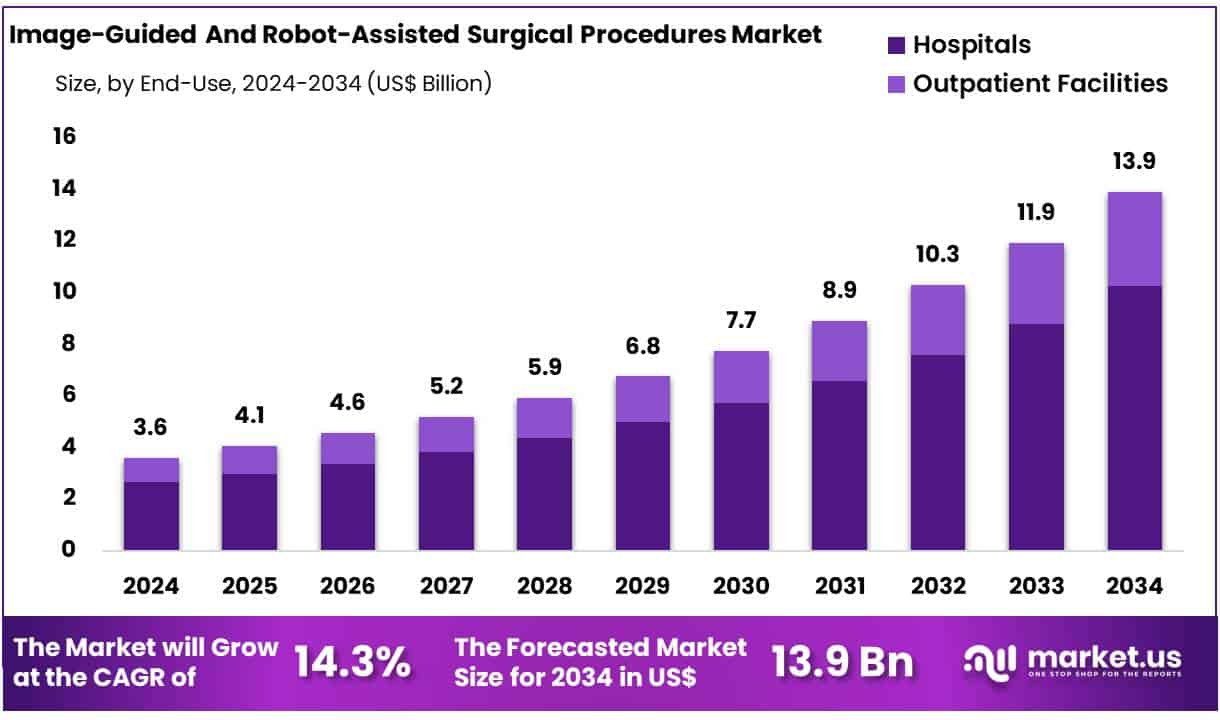
The Global Image-Guided and Robot-Assisted Surgical Procedures Market is expected to grow from USD 3.6 billion in 2024 to USD 13.9 billion by 2034, at a CAGR of 14.3%. In 2023, North America dominated the market with a 46.4% share, generating USD 1.67 billion in revenue. This growth is largely driven by the rising number of chronic diseases, including cancer, heart conditions, and neurological disorders. These health issues often require complex surgeries, where precision and safety are critical. Advanced surgical systems are helping meet this demand.
Rapid advancements in medical technology are also playing a major role. Modern systems now combine 3D imaging, artificial intelligence, and real-time navigation to guide surgical tools with greater accuracy. These innovations enable minimally invasive procedures, which lead to faster recovery, less pain, and fewer complications. Backed by global health organizations, these tools are being widely adopted to improve surgical quality and patient outcomes.
The aging global population is another factor contributing to market growth. Older individuals are more likely to need surgeries such as joint replacements or tumor removals. To address this, many governments are increasing public healthcare spending and deploying modern surgical platforms in state hospitals. These investments also include training programs for healthcare professionals to ensure effective use of the new systems and broader patient access.
Government support and rising patient awareness further strengthen market adoption. People today are better informed about advanced treatment options and prefer surgeries that offer quicker healing. National health campaigns and official health websites have helped build trust in robot-assisted surgeries. Countries like the UK are integrating these procedures into public healthcare plans. Clinical studies from national health bodies continue to show positive outcomes, such as lower complication rates and reduced hospital stays. As a result, global health authorities are actively promoting these technologies to modernize surgical care.
Key Takeaways
- According to recent figures, the Image-Guided and Robot-Assisted Surgical Procedures market earned around USD 3.6 billion in revenue in the base year.
- The market is forecasted to grow rapidly, reaching approximately USD 13.9 billion by the end of the forecast period, driven by strong demand.
- With a robust CAGR of 14.3%, this sector is experiencing significant momentum due to growing interest in precision and minimally invasive surgeries.
- Among surgical specialties, orthopedic surgery took the lead, contributing the highest revenue with a dominant market share of 27.2%.
- In terms of end users, hospitals stood out as the top revenue generators, accounting for 73.8% of the overall market share.
- Regionally, North America maintained its leadership, securing the highest contribution with a commanding 46.4% share of the global market.
Get sample report: https://market.us/report/image-guided-and-robot-assisted-surgical-procedures-market/
Emerging Trends
- Artificial Intelligence (AI) and Machine Learning in Surgery: AI-powered tools are now helping surgeons by analyzing medical images in real time during surgery. These tools can guide the surgeon’s actions, reducing the chance of mistakes. AI is also useful for planning surgeries in advance and monitoring recovery afterward.
- Augmented Reality (AR) in Operating Rooms: AR technology allows surgeons to see detailed, layered visuals of a patient’s internal organs, tissues, and even hidden tumors. This enhanced view helps make surgeries more precise and less invasive, reducing the need for large incisions.
- Remote Surgery (Telesurgery): Thanks to high-speed internet and robotic arms, surgeons can now operate on patients who are far away. This gives people in remote or rural areas access to high-quality surgical care without needing to travel. It also allows top surgeons to treat patients globally from a single location.
- Smaller and More Affordable Robotic Systems: New robotic surgical devices are being designed to be compact and budget-friendly. This makes it easier for smaller and rural hospitals to adopt advanced surgical technologies, helping more people access better healthcare.
- Expanding Use in More Specialties: While robotic and image-guided systems were first used in areas like urology and gynecology, they are now being adopted for heart, brain, spine, and cancer surgeries. The aim is to improve safety and efficiency across all types of surgeries.
Use Cases
- Robot-Guided Spinal Surgery: In spine surgeries, robotic systems combined with real-time imaging help surgeons place instruments with high precision. This reduces the risk of nerve damage and supports faster patient recovery.
- Image-Guided Brain Surgery: For complex brain procedures, robotic tools use MRI and CT scan data to guide the surgeon with exceptional accuracy. This allows removal of brain tumors or biopsy collection while protecting healthy brain tissue.
- Minimally Invasive Prostate and Gynecological Surgeries: Robotic arms are commonly used in surgeries such as prostate removal or hysterectomy. These minimally invasive procedures require smaller incisions, resulting in less pain, reduced blood loss, and quicker healing.
- Joint Replacement and Orthopedic Surgeries: Robotic systems assist in joint replacements, including knee and hip surgeries. They help align and fit implants more precisely, which improves long-term results and shortens recovery time.
- Liver and Pancreatic Cancer Surgeries: In surgeries involving the liver or pancreas, image-guided robotic systems help surgeons remove only the tumor, preserving as much healthy tissue as possible. This leads to safer operations and better outcomes for patients.
Conclusion
The market for image-guided and robot-assisted surgical procedures is growing rapidly due to rising demand for safer, faster, and more precise surgeries. These advanced technologies are making complex operations less invasive and improving patient recovery. With strong support from governments, public healthcare systems are increasingly adopting these tools. Surgeons now benefit from real-time imaging, AI, and robotic systems that boost accuracy and reduce risks. As awareness among patients increases, more people are choosing these advanced procedures. The technology is also expanding into new surgical specialties, making it a valuable solution for many conditions. Overall, these innovations are transforming how surgeries are performed and improving healthcare quality worldwide.
Contact us on
Market.us (Powered By Prudour Pvt. Ltd.)
Email: inquiry@market.us
Address: 420 Lexington Avenue, Suite 300,
New York City, NY 10170, United States
Tel: +1 718 618 4351


Comments
Post a Comment