Plasma Protein Products Market Surges to USD 70.8 Billion by 2034
The Global plasma protein products market is projected to grow from USD 33.4 billion in 2024 to around USD 70.8 billion by 2034, with a CAGR of 7.8%. North America is leading the market with a 38.4% share, generating USD 12.8 billion in revenue in 2024. This growth is mainly driven by the rising prevalence of chronic and rare diseases, advancements in technology, and increased government support for plasma-based therapies.
One of the major drivers is the growing number of patients with chronic and rare conditions such as primary immune deficiency, hemophilia, and neurological disorders. These illnesses require regular treatment using plasma-derived products like immunoglobulins and clotting factors. Increased diagnosis and earlier treatment have contributed to higher demand. The World Health Organization (WHO) continues to stress the need for global access to safe and effective plasma therapies.
Improved plasma collection and donation systems are also supporting market expansion. High-income countries are building more centers and using better technologies to collect plasma efficiently. At the same time, international health bodies are helping developing countries improve their donation infrastructure. This global focus on collection systems is helping to ensure a more stable and equitable supply of plasma.
Government policies have played a key role in promoting access to these life-saving therapies. Many nations now include plasma protein products in their essential medicines lists and public health programs. Some countries are even investing in domestic manufacturing to reduce dependency on imported products and manage supply chain risks, especially during global shortages.
Technological advancements in purification and virus removal have made plasma products safer. Manufacturers are also exploring recombinant and synthetic alternatives to meet growing demand. Moreover, the medical use of plasma proteins is expanding beyond traditional diseases. For instance, immunoglobulins are being used to treat autoimmune disorders, severe infections, and complications from viral illnesses, further increasing market growth.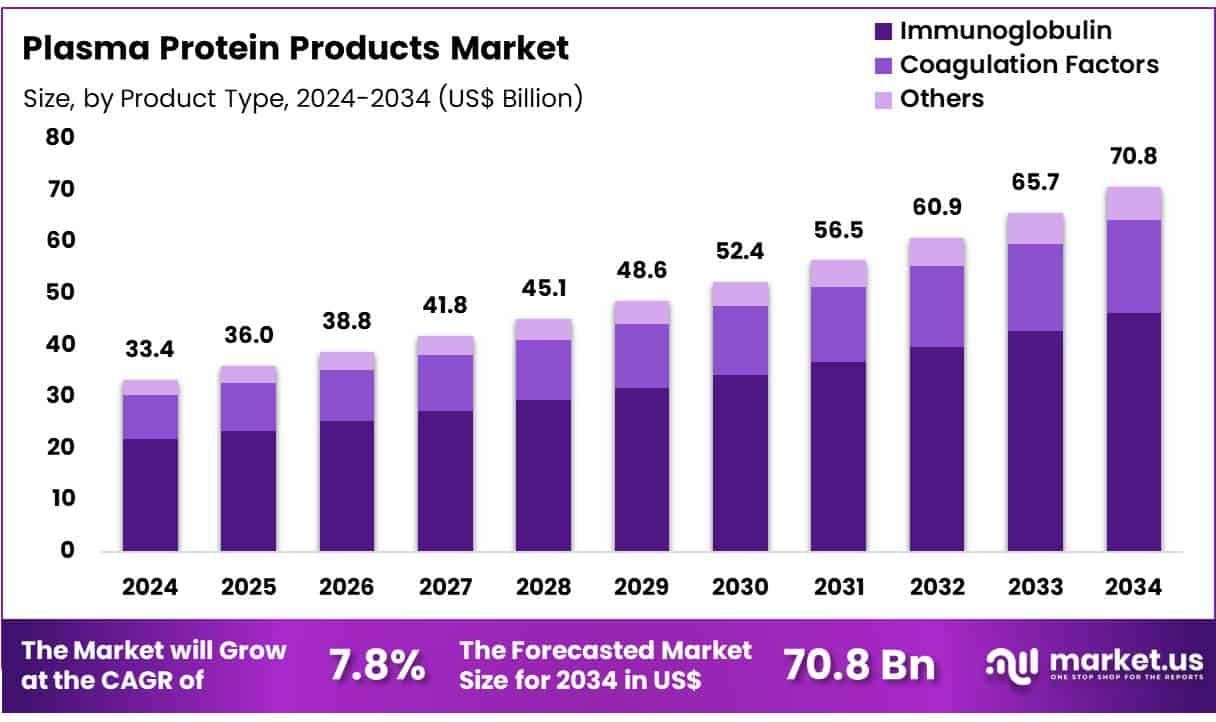
Key Takeaways
- In 2024, the global plasma protein products market earned approximately US$ 33.4 billion and is projected to grow to US$ 70.8 billion by 2034.
- The market is growing at a steady CAGR of 7.8% over the forecast period from 2025 to 2034, reflecting rising global demand.
- Among product types, immunoglobulin dominated in 2024, capturing a leading market share of 65.3% due to its wide therapeutic applications.
- Coagulation factors and other plasma protein products contributed to the remaining market share, supporting treatment of rare blood and immune disorders.
- Hospitals emerged as the top application area, accounting for a dominant 70.2% share, driven by rising inpatient treatments and emergency care needs.
- Retail pharmacies and other distribution channels made up the rest of the market, but with slower growth compared to hospital settings.
- In 2024, North America led the global market, securing a 38.4% share due to advanced healthcare systems and high plasma protein usage.
Get sample report: https://market.us/report/plasma-protein-products-market/request-sample/
Challenges
- Limited Plasma Supply: Plasma protein products rely on human plasma. But many countries struggle to collect enough of it. Donations often fall short, especially in times of crisis or health emergencies. This leads to shortages and uneven access to treatments.
- High Production Costs: Producing plasma-based therapies is expensive. The process includes collection, testing, purification, and transportation. It requires advanced technology and skilled professionals. This raises the final cost of products and limits their availability.
- Complex Infrastructure: Manufacturing plasma therapies needs special facilities. These include donor centers and processing plants. Setting up this infrastructure takes time, money, and expert knowledge. Many developing countries still lack these essential systems.
- Strict Regulatory Demands: Plasma therapies must be extremely safe. This means they go through detailed testing and strict approval steps. Regulatory rules vary across countries. This can delay product launches and make international trade more difficult.
Opportunities
- Rising Global Demand: More people are being diagnosed with immune and rare disorders. Doctors are also using plasma therapies for a wider range of diseases. This increases demand across many regions and health systems.
- Growth in Emerging Markets: Some regions still lack local production of plasma therapies. These markets offer strong growth potential. With the right investment and partnerships, they can build up donation systems and factories.
- Advances in Technology: Automation and small scale processing units are becoming popular. These technologies make plasma production more efficient and affordable. They also help expand production in remote or low-resource areas.
- Research in New Therapies: Scientists are exploring ways to make plasma like therapies in labs. These alternatives could ease supply pressure. They may also offer safer and faster treatment options for some conditions.
Conclusion
The plasma protein products market is on a strong growth path, driven by rising demand for treatments of chronic and rare diseases. Advancements in collection methods, technology, and government support are making these life-saving therapies more accessible across the globe. However, challenges like limited plasma supply, high production costs, and complex regulations still exist. Despite these issues, the market holds great potential, especially in developing regions where infrastructure is growing. Continued innovation, global partnerships, and expanded research efforts will play a key role in meeting future healthcare needs. With strong focus and collaboration, the plasma protein sector is well-positioned to improve patient outcomes and support long-term health system resilience.
Contact us on
Market.us (Powered By Prudour Pvt. Ltd.)
Email: inquiry@market.us
Address: 420 Lexington Avenue, Suite 300,
New York City, NY 10170, United States
Tel: +1 718 618 4351


Comments
Post a Comment