Immunomodulators Market Forecasts USD 430.6 Billion Value by 2034, Led by North America
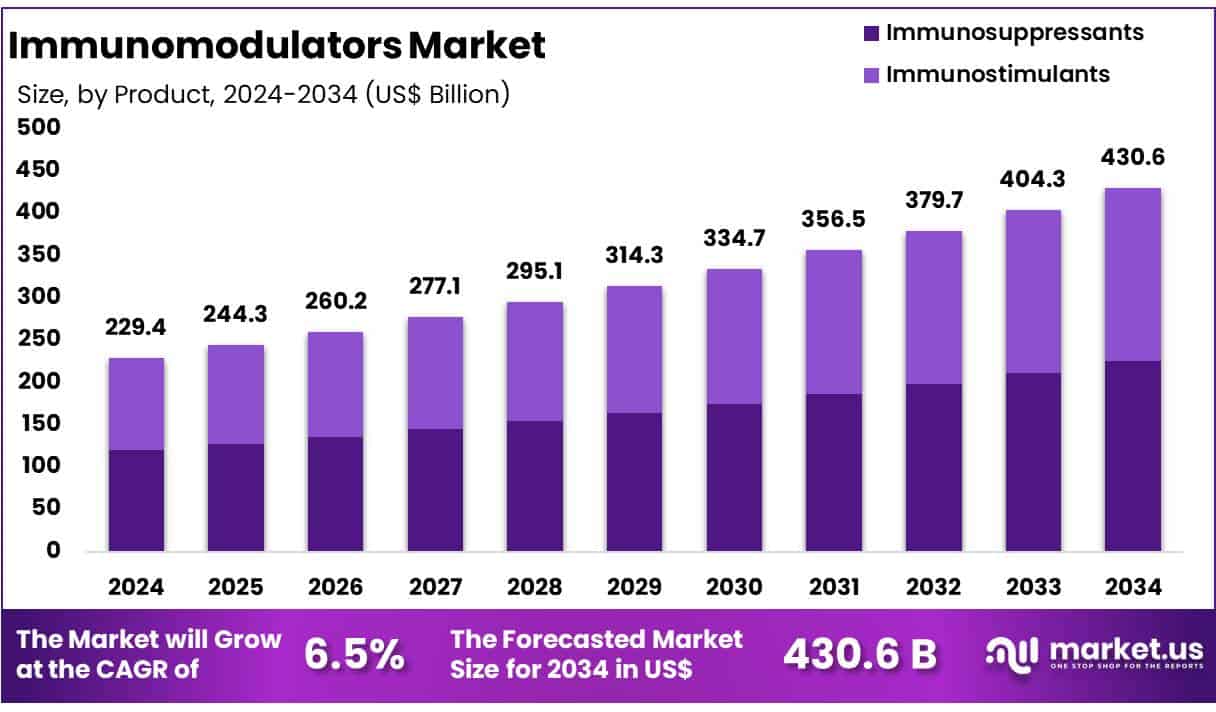
The Global immunomodulators market is projected to reach USD 430.6 billion by 2034, growing from USD 229.4 billion in 2024 at a CAGR of 6.5% between 2025 and 2034. North America leads the market with over 39% share, totaling USD 89.5 billion in 2024. A key driver of this growth is the rising prevalence of chronic and immune-related diseases. Conditions like cancer, rheumatoid arthritis, and multiple sclerosis require long-term immune system control. Immunomodulators, especially those using growth factors, help adjust the body’s immune response, making them essential in managing such illnesses. As these conditions increase globally, the demand for advanced immune therapies continues to grow.
Scientific progress and technological innovation are also boosting market growth. New treatments are becoming more targeted and personalized, reducing harm to healthy cells. Growth factors are central to these advancements, enabling tailored therapies that match individual patient biology. AI and genetic testing support this shift by making drug development and monitoring more precise. Additionally, combination therapies—such as pairing immunomodulators with chemotherapy or biologics—are improving outcomes, especially in oncology and transplant medicine. These innovations are moving into mainstream use, offering more effective, patient-specific treatments.
Growing healthcare access in developing regions is another key trend. As hospitals and clinics expand in these areas, demand for advanced therapies is increasing. Growth-factor-based treatments are being used more frequently to manage infections, autoimmune conditions, and post-chemotherapy complications. Government support is playing a vital role here. Many health departments are investing in local manufacturing and funding research to improve availability. This public backing, along with initiatives from global health agencies, is helping make immunomodulators a standard part of care in many regions.
Lastly, global health preparedness is strengthening interest in immunomodulators. The COVID-19 pandemic highlighted the need for resilient immune systems and rapid-response treatments. Governments and health organizations are now including immunomodulators in their disease response strategies. These therapies help boost immunity and reduce the impact of outbreaks. As a result, immunomodulators are becoming essential tools in improving public health security and managing future biological threats.
Key Takeaways
- In 2024, the global Immunofluorescence assay market reached US$ 229.4 Billion and is projected to grow to US$ 430.6 Billion by 2034.
- The market is expanding at a healthy CAGR of 6.5%, reflecting strong demand for immunofluorescence-based diagnostic and research applications.
- Immunosuppressants led the product segment with a dominant 52.3% share, showing their widespread use in immune system modulation and therapy.
- Cancer treatment emerged as the top application area, generating 44.7% of total revenue due to rising oncology research and treatment needs.
- Hospital pharmacies made up the largest distribution channel, contributing 48.0% share by efficiently handling prescription and specialty immunofluorescence products.
- North America captured the largest regional market share at 39.0%, supported by advanced healthcare infrastructure and high diagnostic demand.
Get sample report: https://market.us/report/immunomodulators-market/request-sample/
Emerging Trends
- Rise of Personalized Medicine: New treatments are being tailored to individual patients based on their genes and immune system profile. This helps improve the effectiveness of therapy while reducing unwanted side effects.
- Growth of Combination Therapies: Doctors are now using immunomodulators together with other treatments like chemotherapy, targeted therapies, or biologics. This approach is showing better results in treating diseases like cancer and autoimmune disorders.
- Expansion of Biologics and Biosimilars: Biologics—special drugs made from living cells—continue to be widely used. At the same time, more affordable versions of these drugs, called biosimilars, are entering the market, making treatment more accessible.
- Use of Digital and Remote Monitoring Tools: Patients can now use wearable devices and apps to track their treatment progress. This allows healthcare providers to adjust medications more accurately and quickly.
Use Cases
- Autoimmune Diseases: Immunomodulators are widely used to manage autoimmune conditions like rheumatoid arthritis, multiple sclerosis, inflammatory bowel disease, and psoriasis. These drugs help reduce inflammation and prevent the immune system from attacking the body.
- Cancer Treatments: Immunomodulators play a major role in cancer care. They help boost the immune system to fight cancer cells or make it easier for other treatments like chemotherapy and radiation to work better.
- Infectious Disease Management: Some immunomodulators were used during the COVID-19 pandemic to help reduce inflammation and improve recovery. They continue to be explored for treating severe infections and managing the immune system’s response.
- HIV and Chronic Viral Conditions: New types of immunomodulators are being developed to help manage long-term viral diseases. They aim to keep the immune system strong and reduce complications from long-standing infections.
Conclusion
The immunomodulators market is showing strong growth due to the rising need for better treatments for chronic, autoimmune, and infectious diseases. With advances in personalized medicine, digital tools, and drug delivery methods, these therapies are becoming more effective and easier to use. The growing use of combination therapies and biologics is also improving patient outcomes. Support from governments and global health agencies is helping expand access to these treatments, especially in developing regions. As health systems aim for better disease preparedness, immunomodulators are playing a key role in boosting immunity and managing complex conditions. Overall, the market is moving toward safer, smarter, and more personalized care options.
Contact us on
Market.us (Powered By Prudour Pvt. Ltd.)
Email: inquiry@market.us
Address: 420 Lexington Avenue, Suite 300,
New York City, NY 10170, United States
Tel: +1 718 618 4351


Comments
Post a Comment