Skin Cancer Treatment Market Shows Strong Growth Forecast Through 2034
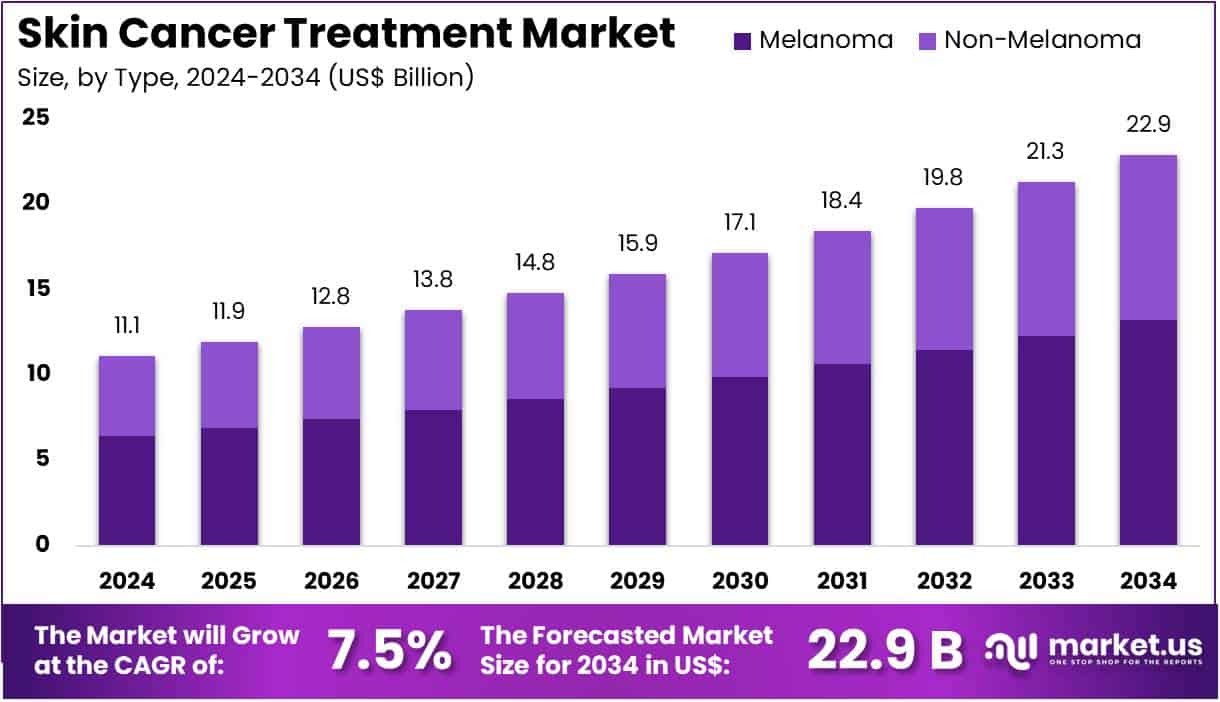
The Global Skin Cancer Treatment Market is projected to grow from USD 11.1 billion in 2024 to approximately USD 22.9 billion by 2034. This marks a steady CAGR of 7.5% during the forecast period. One of the biggest drivers of this market growth is the sharp rise in skin cancer cases globally. According to the World Health Organization (WHO), increased sun exposure, climate change, and lifestyle changes are contributing factors. As more people are diagnosed, healthcare systems are expanding services to meet growing demand.
An aging global population also plays a key role in market expansion. Older adults face a higher risk of developing skin cancer due to prolonged UV exposure over time. As life expectancy increases, the number of elderly individuals vulnerable to skin cancer also rises. This trend is particularly noticeable in developed countries with large aging populations. The rising need for early and effective treatments in these groups is boosting the demand for advanced medical care.
Technological progress has significantly improved how skin cancer is treated. New therapies such as immunotherapy, targeted drugs, and advanced topical treatments offer better outcomes with fewer side effects. Health bodies like the U.S. FDA and the NHS are promoting these options for wider clinical use. In parallel, AI-powered diagnostic tools and telemedicine are helping to detect cases early, especially in rural areas. These innovations are not only improving access but also enhancing diagnostic speed and accuracy.
Public health campaigns are making early detection a top priority. Government agencies are encouraging regular skin checks and promoting awareness programs. Early diagnosis improves treatment success rates and reduces long-term costs. In addition, many countries are now offering financial support, research funding, and free screenings. These policies are ensuring better access to care and encouraging people to seek treatment promptly. Together, these factors are driving sustained growth in the skin cancer treatment sector.
Key Takeaways
- In 2024, global skin cancer treatment revenues hit US$ 11.1 billion and are forecasted to reach US$ 22.9 billion by 2034.
- The market is growing steadily at a compound annual growth rate (CAGR) of 7.5% over the 2025 to 2034 forecast period.
- Among cancer types, melanoma dominated the segment in 2024, accounting for a 57.8% share of the total market.
- Targeted therapy emerged as the leading treatment approach, holding a 45.0% share among all therapy types used for skin cancer.
- Distribution-wise, hospital pharmacies led the pack, contributing 56.4% of the total market revenue in the skin cancer treatment sector.
- North America secured the highest regional market share in 2024, leading globally with 41.3% of the total revenue.
Get sample report: https://market.us/report/skin-cancer-treatment-market/request-sample/
Emerging Trends
- More Use of Immunotherapy: Doctors are increasingly using the body's immune system to fight skin cancer, especially melanoma. Immunotherapy drugs are now being given before surgery, which can help shrink the tumor and improve outcomes after the operation.
- New Cancer Vaccines: Scientists are testing new vaccines that may help the immune system recognize and attack cancer cells. These are different from traditional vaccines and are being studied for patients with advanced stages of skin cancer. Some of these are made from a person’s DNA or tumor cells.
- Improved Drug Delivery Methods: Researchers are working on ways to deliver medicine more effectively into the skin. One method uses lasers to open small channels in the skin, allowing creams or gels to work better. Another method uses hair follicles as pathways to get medicine deeper into the skin.
- Artificial Intelligence (AI) in Diagnosis: AI tools are now being used to analyze skin images and tissue samples. This helps doctors detect skin cancer earlier and choose the best treatment. These tools are also being developed to predict which patients might have a higher risk of cancer coming back.
Use Cases
- Immunotherapy Before Surgery: In some hospitals, patients with advanced skin cancer are now receiving immunotherapy before their surgery. This approach is helping doctors reduce the cancer before removing it and may lower the chances of the cancer returning.
- Using Vaccines to Support Immunotherapy: New experimental vaccines are being used along with existing treatments to boost the immune response. These are given to patients who are not responding well to standard immunotherapy alone.
- Laser-Based Treatment Support: In certain clinics, laser devices are used to help medicines reach deeper into skin cancer lesions. This is especially helpful for people who cannot undergo surgery or prefer a non-invasive approach.
- Topical Therapies for Non-Melanoma Cancers: Some non-melanoma skin cancers are treated with creams that are applied directly to the skin. These treatments are becoming more effective when combined with new delivery methods like microneedles or light therapy.
Conclusion
The skin cancer treatment market is showing strong and steady growth, driven by rising cases, better awareness, and ongoing innovation in care. The shift toward advanced options like immunotherapy, AI diagnostics, and non-invasive delivery methods is making treatment more effective and widely available. Aging populations and improved access to healthcare are also increasing the demand for early and personalized treatment plans. Support from governments and public health programs continues to improve early detection and patient outcomes. As science and technology move forward, skin cancer care is becoming more targeted, less invasive, and more accessible to people everywhere. This positive momentum is expected to shape the future of skin cancer treatment globally.
Contact us on
Market.us (Powered By Prudour Pvt. Ltd.)
Email: inquiry@market.us
Address: 420 Lexington Avenue, Suite 300,
New York City, NY 10170, United States
Tel: +1 718 618 4351


Comments
Post a Comment