Outpatient Care Market Hits USD 48.1 Billion in 2024, Led by North America
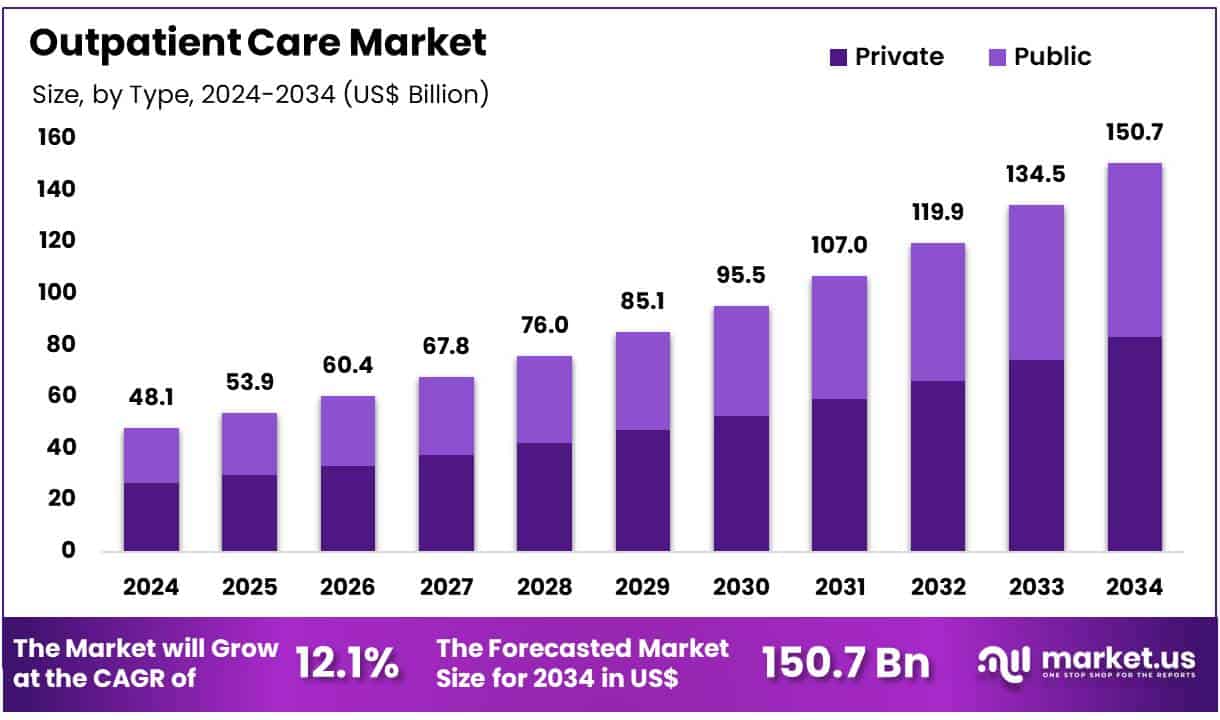
The Global Outpatient Care Market is projected to reach approximately USD 150.7 billion by 2034, up from USD 48.1 billion in 2024. This marks a strong CAGR of 12.1% during the forecast period (2025–2034). North America currently leads the market with over 37.4% share, generating USD 18.0 billion in revenue in 2024. Key drivers of growth include an aging population, rising chronic diseases, and shifting preferences toward cost-effective care without hospital stays.
As people age, they often face long-term health issues such as diabetes, heart disease, or high blood pressure. These conditions typically require routine care rather than hospitalization. Outpatient services help manage these needs effectively and at a lower cost. Governments and health programs worldwide are now prioritizing early intervention and long-term disease management through outpatient setups, reducing the need for more expensive hospital-based treatments.
Digital health and telemedicine are transforming outpatient care. Since the pandemic, many countries have embraced telehealth platforms to provide remote consultations. This helps patients in remote or rural areas access healthcare without traveling long distances. The growing use of digital tools is making outpatient care faster, more convenient, and more widely available, helping bridge gaps in access to medical services.
Healthcare systems are also emphasizing prevention and community care. Nurses and local health workers now play a larger role in providing outpatient services, especially in developing countries. Their services include health screenings, vaccinations, and early disease detection. At the same time, governments are using data to track health trends and develop programs tailored to community needs. This focus on prevention is reducing hospital admissions and improving public health outcomes.
Key Takeaways
- In 2024, the outpatient care market earned US$ 48.1 billion and is projected to hit US$ 150.7 billion by 2034.
- The market is expanding at a strong CAGR of 12.1% over the forecast period from 2025 to 2034.
- Outpatient care services are categorized into public and private providers, with private facilities leading the market with 55.3% share in 2023.
- Based on application, hospitals accounted for a notable portion of the market, capturing a 38.5% share.
- The service types include urgent care, imaging centers, ambulatory surgical centers, primary clinics, and more.
- Among these, ambulatory surgical centers dominated with the highest revenue share of 31.2% in 2024.
- Regionally, North America led the outpatient care market with a commanding 37.4% market share in 2024.
Get sample report: https://market.us/report/outpatient-care-market/request-sample/
Challenges
- Increasing Demand: More people now use outpatient services than ever before. This is because many treatments have become quicker and more advanced. But as demand increases, clinics often struggle to keep up with patient loads, leading to delays and limited appointment slots.
- Staff Shortages and Burnout: There is a shortage of trained healthcare workers in outpatient settings. Doctors, nurses, and support staff often feel overworked. This can lead to stress, lower job satisfaction, and even mistakes in care.
- Poor Patient Flow and Scheduling Issues: Many outpatient departments still use manual systems for scheduling and record-keeping. These systems often cause double bookings, long wait times, or patient no-shows. It creates confusion and impacts the overall quality of care.
- Technology Gaps: While some outpatient centers use modern tools, many are still behind. Outdated systems make it hard to track patient records, manage follow-ups, or provide seamless communication. This leads to delays and poor coordination.
Opportunities
- Growth of Telehealth: Telemedicine allows patients to connect with doctors through video or phone calls. This helps those who live far away or have trouble traveling. It also reduces the need for in-person visits and makes care faster and easier.
- Integrated Community Care: Healthcare is moving toward neighborhood-level care. In this model, general doctors, specialists, nurses, and social workers work together in one place. It makes services more connected and easier to access.
- Smart Use of Technology: Modern tools like automated check-in systems, digital prescriptions, and electronic health records can make outpatient care smoother. Artificial intelligence is also helping with diagnosis, appointment reminders, and administrative work.
- Better Policies and Payment Systems: Governments and health organizations are working on policies that support outpatient services. These include simplified billing, quicker approvals, and funding for new care models. Such changes can reduce the burden on both patients and providers.
Conclusion
Outpatient care is becoming a key part of modern healthcare. It offers patients the chance to receive quality treatment without the need for hospital stays. As healthcare systems aim to lower costs and improve access, outpatient services are gaining more focus. The use of digital tools, telehealth, and community-based care is helping to make these services more accessible and efficient. However, challenges like staff shortages, poor scheduling, and limited access in rural areas still need attention. By improving technology use, supporting healthcare workers, and focusing on patient needs, the outpatient care sector can continue to grow. It is clear that outpatient care will play a major role in shaping the future of global healthcare.
Contact us on
Market.us (Powered By Prudour Pvt. Ltd.)
Email: inquiry@market.us
Address: 420 Lexington Avenue, Suite 300,
New York City, NY 10170, United States
Tel: +1 718 618 4351


Comments
Post a Comment