Healthcare Construction Market Set for 4.5% CAGR Growth, Valued at US$ 442.0 Billion by 2034
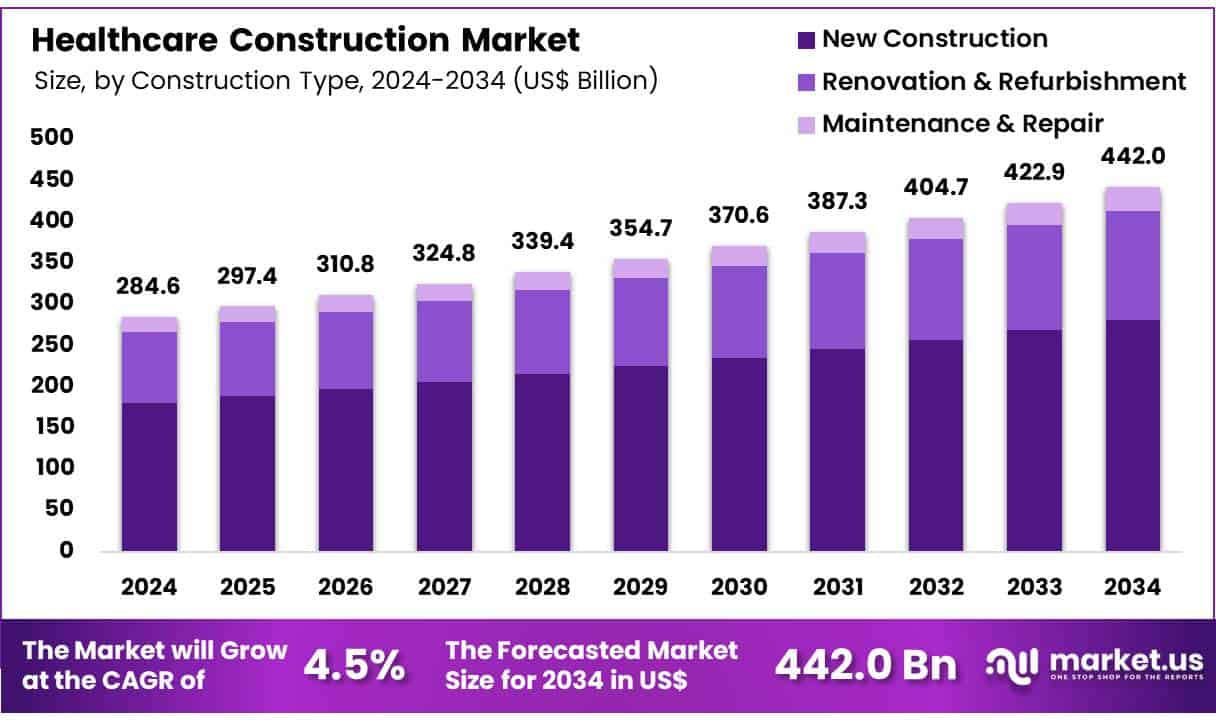
The Global Healthcare Construction Market is projected to reach US$ 442.0 billion by 2034, up from US$ 284.6 billion in 2024, growing at a CAGR of 4.5% from 2025 to 2034. North America led in 2024 with a 36.2% market share and US$ 103.0 billion in revenue. This growth is mainly driven by aging populations, rising chronic illnesses, and stronger government support for health infrastructure. Public and private investments are boosting healthcare access, especially in underserved and rural regions.
An increase in chronic diseases such as heart conditions, diabetes, and respiratory problems is placing more demand on long-term care services. As a result, healthcare facilities are being expanded to include more outpatient clinics and specialty centers. Simultaneously, healthcare is shifting away from large hospitals to smaller, community-based care centers. These outpatient facilities are more cost-effective and easier to maintain, which makes them attractive for both public and private stakeholders.
The use of modern building technologies such as modular construction, digital planning tools, and 3D design is improving efficiency in healthcare projects. These methods help reduce construction time and allow for quick response during health emergencies. In addition, sustainability is now a core focus. Many new healthcare buildings are designed with green features like energy-saving systems and clean air technologies. These reduce operating costs and promote healthier environments for patients and medical staff alike.
Expanding healthcare access in low-resource areas is also a key goal. Facilities are being upgraded to ensure access to clean water, stable electricity, and basic services. Solar panels and backup power systems are being added to improve reliability. However, challenges remain, including rising material costs and shortages of skilled labor. Despite this, the sector continues to grow, supported by government funding, international health initiatives, and public-private partnerships that help manage costs and boost delivery.
Key Takeaways
- In 2024, the global healthcare IT consulting market earned US$ 284.6 billion, projected to grow at a CAGR of 4.5% through 2034.
- By 2034, the market is expected to reach US$ 442.0 billion, driven by increasing digitization and demand for expert health IT advisory services.
- Hospitals were the leading facility type in 2024, accounting for 52.0% of the market due to their growing reliance on IT infrastructure and consulting.
- The New Construction segment dominated the Construction Type category in 2024, holding 63.5% share, reflecting major investment in new healthcare facilities.
- In terms of end users, the Private Sector led with a 61.8% market share in 2024, driven by private healthcare expansion and modernization.
- North America emerged as the top regional market in 2024, capturing 36.2% share, thanks to advanced healthcare systems and strong tech adoption.
Get sample report: https://market.us/report/healthcare-construction-market/request-sample/
Challenges
- Strict Rules and Health Standards: Healthcare buildings must follow many rules to keep patients safe. These include proper air systems, clean rooms, and emergency access. Builders must work closely with health experts to get everything right, which can slow down the project.
- Keeping Hospitals Running During Construction: Many hospitals stay open during renovation or expansion. This makes it hard to manage noise, dust, and movement around patients. Extra care is needed to protect people from infections and disruption.
- Many People Involved: Healthcare construction brings together doctors, engineers, architects, and government officials. Each group has different needs and ideas. Without good planning, this can lead to confusion and delays.
- Tight Schedules and Budgets: Hospitals can’t wait long for new buildings. Projects often have short deadlines and limited funds. Any delay or mistake can cost more and affect patient care.
- Lack of Skilled Workers: There aren’t enough trained people to work on healthcare construction sites. This makes it hard to find the right talent and finish the work on time.
Opportunities
- Rising Demand for Health Buildings: People are living longer and need more care. New hospitals, clinics, and wellness centers are being planned to meet this demand. This gives a strong push to the construction sector.
- Focus on Renovating Old Spaces: Instead of building from scratch, many health systems now upgrade old spaces. This saves time and money. It also helps hospitals stay modern without fully shutting down.
- Use of New Technologies: Tools like 3D design, modular building, and smart sensors make work faster and safer. These tools help reduce waste and improve accuracy.
- More Clinics and Small Centers: Healthcare is moving closer to where people live. More small care centers and outpatient units are being built. These are easier to build and need less space.
- Better Teamwork Across Sectors: Construction teams are now working closely with tech companies and healthcare experts. This teamwork leads to smarter, more flexible building designs.
Conclusion
The healthcare construction sector is going through major changes to meet growing healthcare needs. Aging populations, lifestyle-related illnesses, and a push for better access to care are driving the development of new and upgraded facilities. Builders are using modern methods to improve speed, reduce costs, and deliver high-quality spaces that meet strict health standards. Smaller, community-based centers are becoming more popular, making care more accessible and affordable. At the same time, public and private partnerships are helping to manage challenges such as funding and labor shortages. Overall, the industry is adapting quickly and is well-positioned to support global healthcare goals through smarter and more sustainable infrastructure.


Comments
Post a Comment