Veterinary Drugs Market Growth Accelerates as Demand Surges for Animal Healthcare Solutions
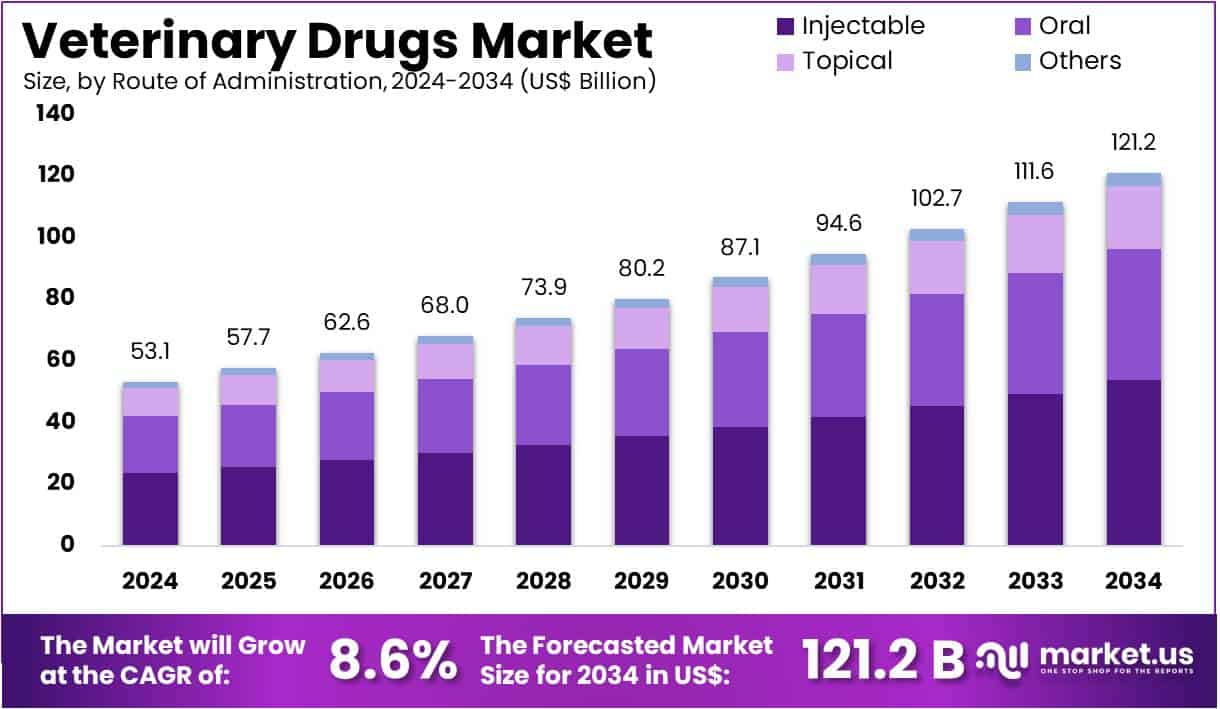
The Global veterinary drugs market is projected to reach around US$ 121.2 billion by 2034, up from US$ 53.1 billion in 2024. This represents a strong CAGR of 8.6% from 2025 to 2034. A key factor driving this growth is the rising rate of pet ownership. More people now treat pets as family members, especially in urban areas. As awareness of animal health increases, so does the demand for medicines like antibiotics, vaccines, and pain relievers. This trend is expected to continue, especially in regions where pet care services are becoming more accessible.
Another important factor is the increase in animal diseases, including infections, arthritis, and diabetes. The World Organisation for Animal Health (WOAH) emphasizes the importance of monitoring such conditions to protect both animals and humans. Zoonotic diseases, which spread between animals and humans, are also on the rise. This has led to growing demand for effective treatments in clinics, farms, and shelters. The focus on early detection and control of animal diseases is becoming a top priority in both pet care and livestock management.
Livestock farming is expanding globally, especially in developing nations. This is boosting demand for veterinary drugs used in reproductive care, deworming, and disease prevention. Healthy livestock contribute to food safety, making veterinary medicines essential in the meat, milk, and egg supply chain. Governments and health bodies such as the FAO, WHO, and local veterinary services are investing in vaccination programs and disease control policies to protect public health and improve food quality.
Technological advances are also shaping the market. Telemedicine, AI tools, and wearable devices help diagnose diseases faster and improve animal care. There's also a growing shift toward preventive and personalized treatments, where medicines are tailored to the animal’s breed or condition. These innovations enhance long-term health outcomes and support the overall growth of the veterinary drugs market.
Key Takeaways
- In 2024, the veterinary drugs market reached US$ 53.1 billion and is projected to grow to US$ 121.2 billion by 2034.
- The market is growing at a steady CAGR of 8.6%, reflecting increasing investment and demand across both companion and production animal sectors.
- Among product types, pharmaceuticals took the lead in 2023, accounting for 47.6% of the total veterinary drugs market share.
- Distribution through veterinary hospitals and clinics was most prominent, with this channel holding 52.8% of the total market revenue.
- North America remained the top regional market in 2023, securing a leading share of 41.1% due to high animal healthcare spending.
Get sample report: https://market.us/report/global-veterinary-drugs-market/request-sample/
Challenges
- Strict Government Regulations: Governments around the world have put in place strong rules for approving veterinary drugs. These rules are different from country to country, which makes it harder for companies to launch the same product globally. Long approval times also slow down market entry and increase costs.
- Antibiotic Resistance: The overuse of antibiotics in animals has led to a rise in drug-resistant bacteria. This has become a global health concern. Authorities are now placing more controls on the use of such drugs in livestock, pushing companies to find safer alternatives.
- High Cost of Development: Developing veterinary medicines is expensive and time-consuming. Unlike human drugs, veterinary products often have to be created separately for each animal species. This increases research time and production expenses, especially when the expected return on investment is smaller.
- Shortage of Skilled Professionals: There is a growing gap between the demand for veterinary services and the number of trained veterinarians. Clinics in many countries are finding it difficult to hire enough qualified staff, which can reduce the use of new and advanced treatments.
- Price Transparency and Market Consolidation: In some regions, large companies are acquiring many small veterinary clinics. This consolidation is raising concerns about drug pricing and access. Pet owners are demanding more price transparency and value for money, putting pressure on drug makers and distributors.
Opportunities
- Growing Pet Ownership: More people are bringing pets into their homes, treating them like family members. As a result, the demand for high-quality veterinary drugs and care is on the rise. This trend creates new opportunities for both common and advanced treatments.
- Expansion in Livestock and Food Animal Sector: With the global population growing, there is a need for more animal protein like meat, milk, and eggs. To maintain healthy livestock, farmers are investing more in disease prevention and treatment. This opens up new markets for veterinary medicines, especially in developing countries.
- Technological Advancements: Digital tools like telemedicine, mobile apps, and AI-powered diagnostics are making it easier to detect and treat animal diseases. These innovations also speed up drug discovery and improve treatment accuracy, creating new paths for growth.
- Development of Non-Antibiotic Alternatives: Due to concerns about antibiotic resistance, researchers and companies are exploring new types of treatments. Products such as probiotics, vaccines, and herbal formulations are becoming more popular, offering safer options for animal health.
- Global Focus on One Health: The One Health approach, which links human, animal, and environmental health, is gaining attention. This concept is helping drive public and private investments in veterinary drug development and disease control, especially for zoonotic diseases (those that spread between animals and humans).
Conclusion
The veterinary drugs market is growing steadily, driven by rising pet ownership, expanding livestock farming, and growing awareness about animal health. People are now more willing to invest in proper care for their pets and farm animals, which is boosting demand for effective and safe veterinary medicines. Although challenges like strict regulations and high development costs exist, the market is seeing strong support from new technologies and global health initiatives. The shift toward preventive care, non-antibiotic solutions, and digital tools is also shaping future opportunities. With increased focus on animal welfare and the One Health approach, the veterinary drugs market is set to play a key role in global health and food safety.
Contact us on
Market.us (Powered By Prudour Pvt. Ltd.)
Email: inquiry@market.us
Address: 420 Lexington Avenue, Suite 300,
New York City, NY 10170, United States
Tel: +1 718 618 4351


Comments
Post a Comment